Documents and photographs for this section were provided by Paul C. White and William Bookless. The account of the symposia draws on “Overview of Nuclear Warhead Safety and Security” by Paul C. White and K. David Nokes, in Section 3 of Volume 1 of Doomed to Cooperate.
The new Clinton administration determined early on that its disarmament and nonproliferation priorities required close cooperation with Russia. In April 1993, David Nokes of Sandia National Laboratories (SNL) proposed to DOE a series of nonsensitive safety and security (surety) technology workshops involving all six U.S. and Russian nuclear weapons laboratories. The symposia would address the concepts, methods, science, and engineering of safety and security without crossing into matters specific to weapons. DOE officials endorsed an initial approach to the Russian laboratories.
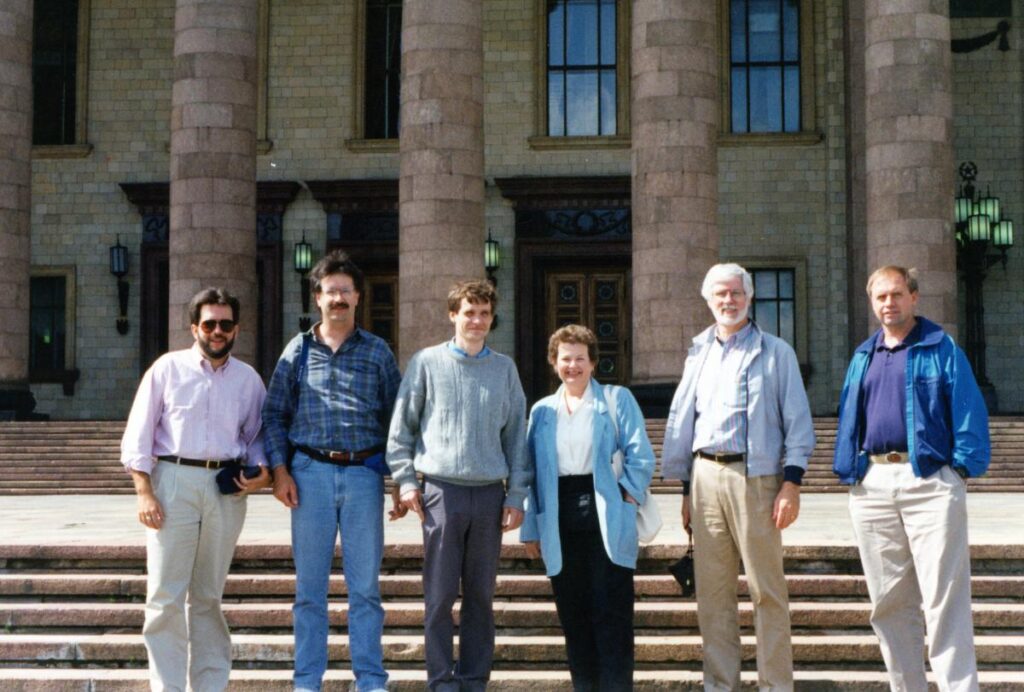
U.S. scientists (D. Croessmann, SNL; W. Bookless, LLNL; an interpreter from VNIITF; P. Newman, SNL; P. White, LANL; D. Olson, DOE) outside the Institute of Metal Physics of the Russian Academy of Sciences. Ekaterinburg, July 1993.
With the approval of the Departments of State and Energy, a team of U.S. laboratory representatives held exploratory discussions in Russia in July 1993. The first meeting took place at the Institute of Metal Physics in Ekaterinburg with representatives of VNIITF, VNIIEF, and the Mayak Production Association, followed by meetings in Moscow. The immediate results of these dialogues were recorded in memoranda signed by the leading participants.
VNIITF–U.S. Laboratories Safety Technology Memorandum
Agreements on risk assessment, abnormal environments, transportation surety, and protective containers.
VNIIEF–U.S. Laboratories Safety Technology Memorandum
A memorandum recording the July 1993 meetings, proposed collaboration, and working groups.
These documents record the commitment of the U.S. laboratories and Russian institutes to hold a series of non-weapons-specific Surety Technology Symposia on agreed topics: risk analysis, transportation surety, hazardous materials, the response of engineered systems to abnormal environments, human reliability, and the translation and communication of technical documents.
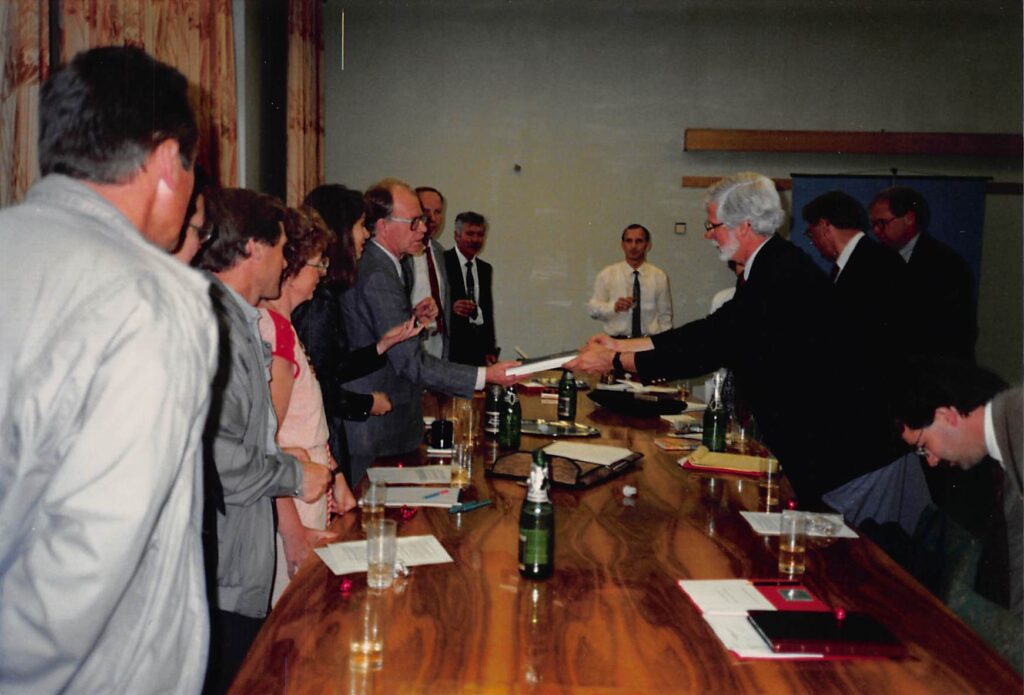
U.S. participants in the Moscow meetings with scientists from VNIIEF. Minatom, Moscow, July 1993.
First symposium: Snezhinsk, October 1993
VNIITF hosted the first Surety Technology Symposium in Snezhinsk in early October 1993. This historic symposium comprised five days of presentations, poster sessions, and discussions involving more than 170 experts from VNIITF, VNIIEF, Mayak, SNL, LANL, LLNL, DOE, the Department of Defense, and Minatom. Discussion focused on approaches to risk assessment and the characterization of abnormal environments, and hinted at the mutual benefits possible if more sensitive, but still unclassified, topics could be addressed.
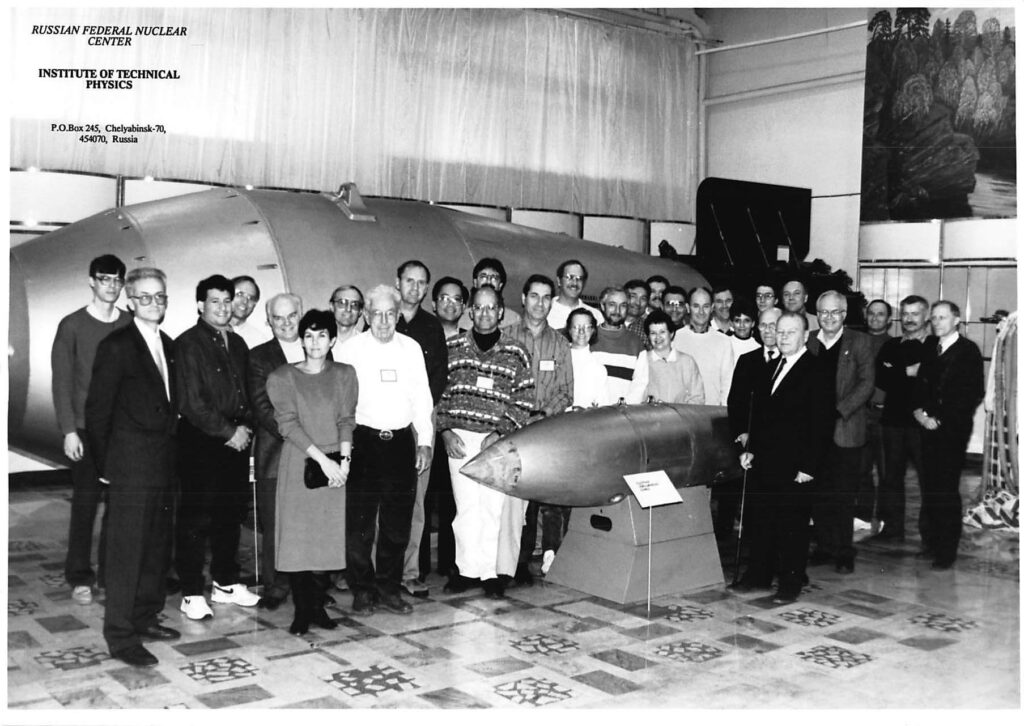
Participants in the first Surety Technology Symposium inside the VNIITF weapons museum. Snezhinsk, October 1993.
First Surety Technology Symposium: Program
The bilingual program for the first Russian–American surety symposium.
First Surety Technology Symposium: Participants
The original list of Russian and American symposium participants.
First Surety Technology Symposium: Concluding Memorandum
A signed memorandum recording the symposium’s conclusions and plans for continued cooperation.
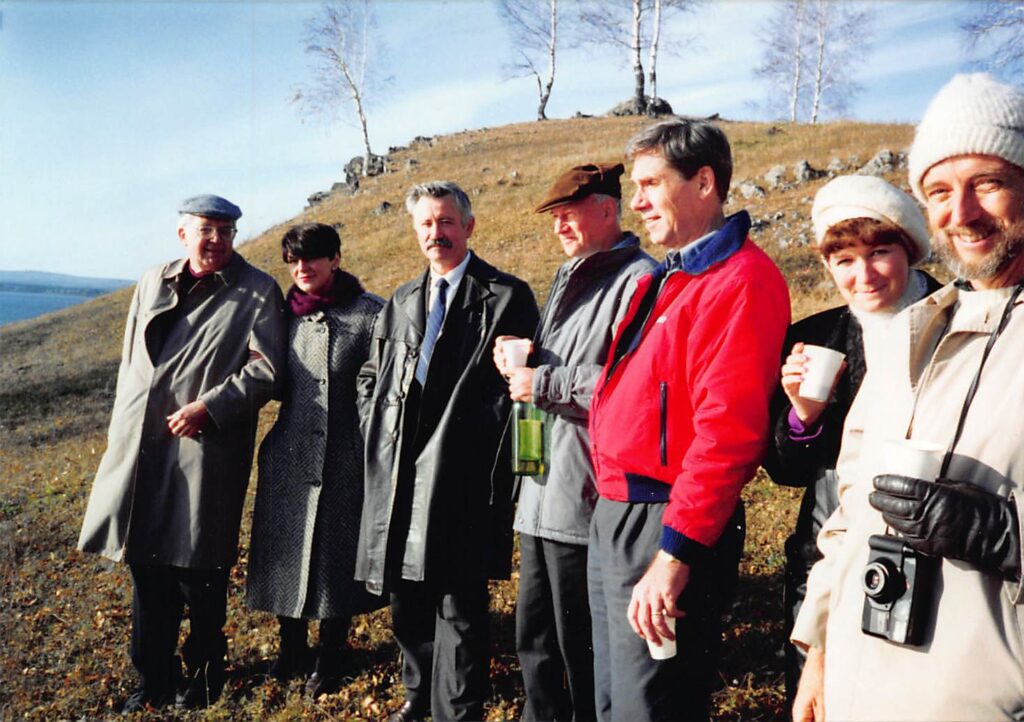
Symposium participants relax on the shore of Lake Silach after the formal discussions. Snezhinsk, October 1993.
Second symposium: Albuquerque, October–November 1993
Shortly afterward, the second symposium, on accident-resistant containers and transportation surety, was held in Albuquerque, New Mexico. Over a week of meetings, nearly 60 U.S. and 25 Russian experts discussed weapons-related safety and security issues without crossing the self-imposed boundary into sensitive subjects. The joint memorandum of the meeting recorded its general results and pointed toward future activities.
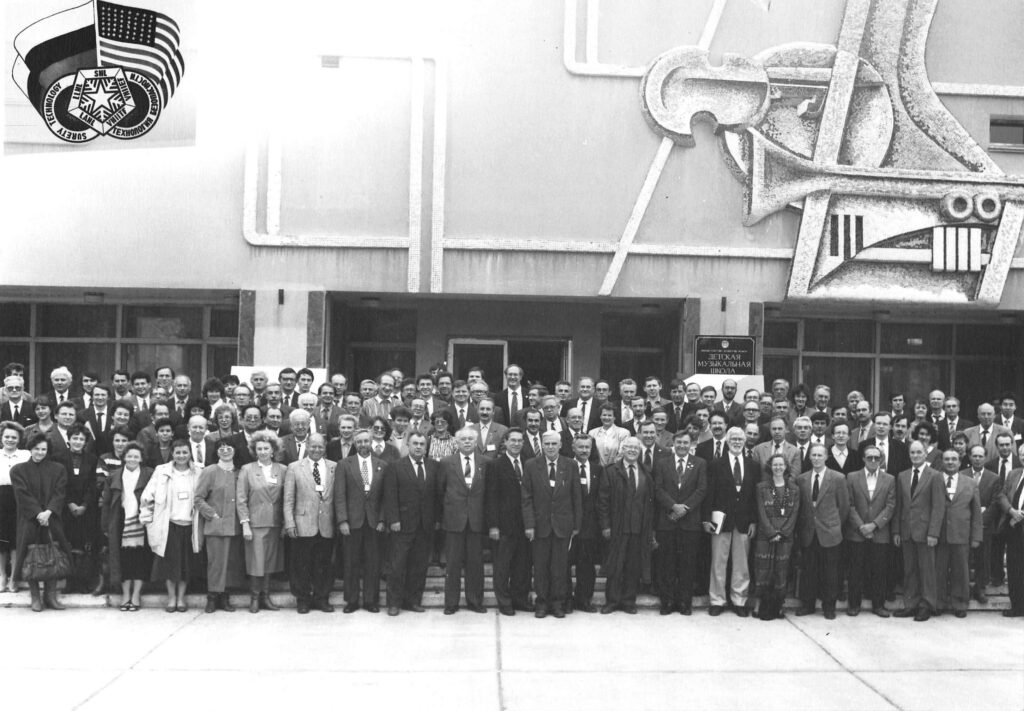
Formal conference photograph of the first Surety Technology Symposium. Snezhinsk, October 1993.
Third symposium: Sarov, February 1994
VNIIEF hosted the third symposium in February 1994. It focused on the identification, handling, and management of hazardous materials, with 60 papers and parallel poster sessions.
Third Surety Technology Symposium: Program
The technical program covering safe handling and related surety topics.
Third Surety Technology Symposium: Participants
The original participant list for the third surety symposium.
Third Surety Technology Symposium: Joint Memorandum
A signed memorandum on hazardous-material management and identification, project proposals, and continuing exchanges.
Third Surety Technology Symposium: Sarov Newspaper Report
Local coverage of the joint symposium on nuclear weapons safety in Sarov, with photographs and reporting on the visiting specialists.
The Curious Incident of the Dosimeter in the Day-Time
An unexpected radiation reading during a Sarov symposium prompts a joint investigation by American visitors and their Russian hosts.
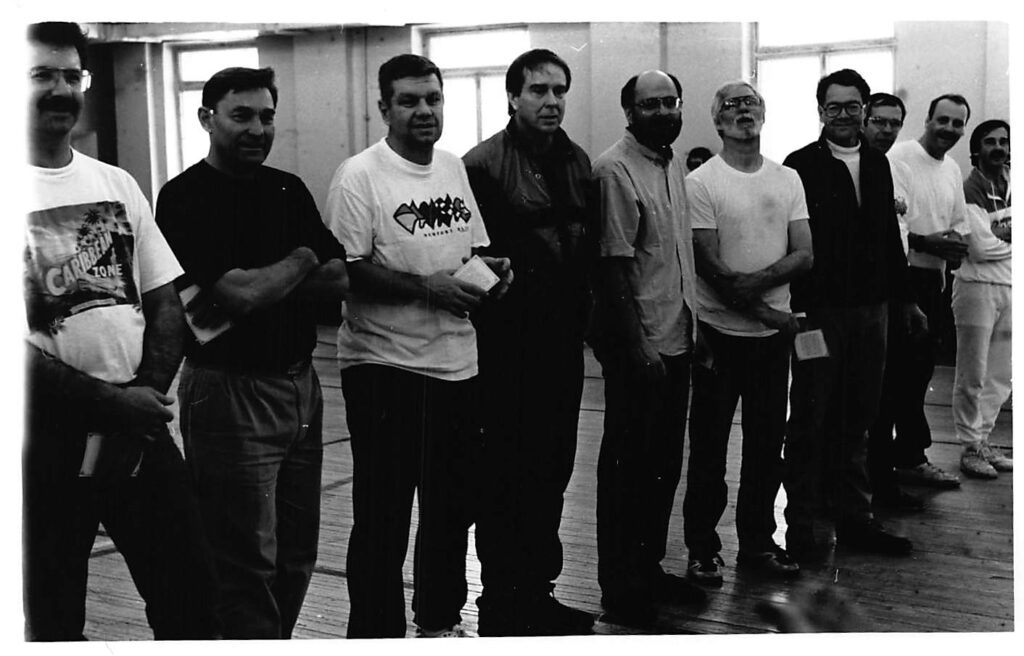
A historic volleyball match between U.S. and Russian scientists: the American team at the start of the match. Sarov, February 1994.
Fourth symposium: Pleasanton, 1994
LLNL hosted the fourth and final symposium, on high-explosives safety, in Pleasanton, California, later in 1994. In little more than a year, relations had progressed from no discussion of nuclear weapons surety at all to four symposia at which hundreds of weapons specialists discussed these important topics at each other’s sites.
Toward a formal agreement
From the time the workshops were first proposed in the spring of 1993, both sides understood them as an interim measure while governments worked out a more formal framework for more sensitive exchanges. That framework became the Agreement between the Government of the United States of America and the Government of the Russian Federation on the Exchange of Technical Information in the Field of Nuclear Warhead Safety and Security, known as the WSSX agreement. It was signed in Moscow on December 16, 1994, by Secretary of Energy Hazel R. O’Leary for the United States and Minister of Atomic Energy Viktor Mikhailov for the Russian Federation, and entered into force on June 1, 1995.
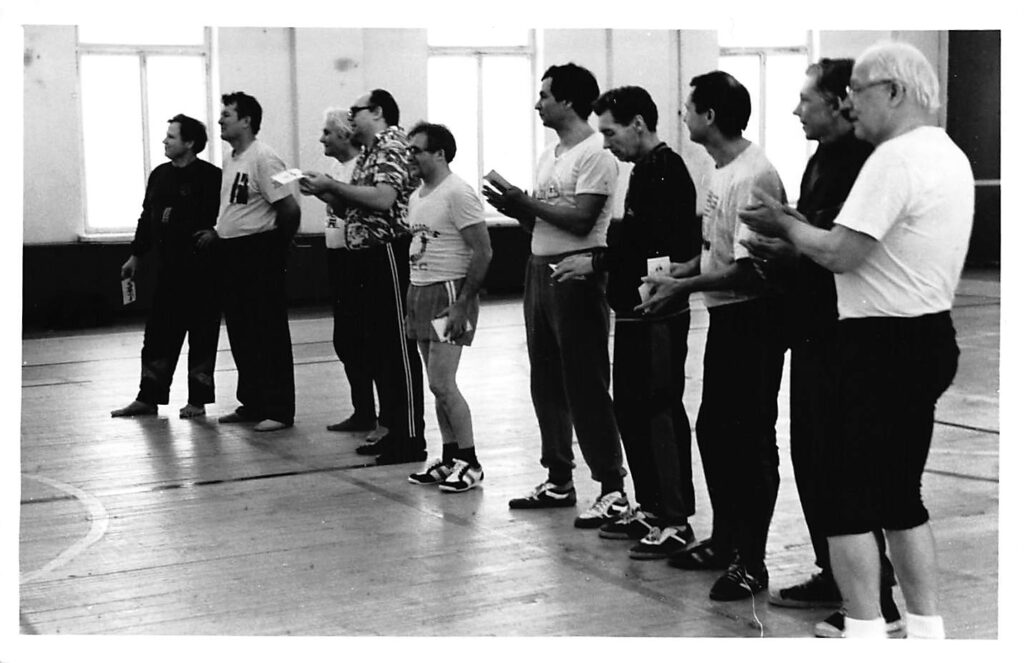
The winning Russian team. Sarov, February 1994.